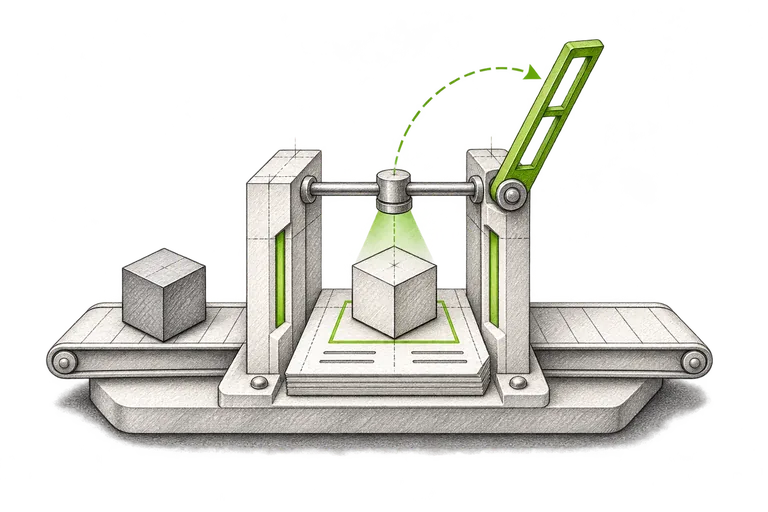
Without renewal
VALIDTime remaining0time units
The right keeps its original expiry.

CIRCULA / SNSF RESEARCH PROGRAMME
CIRCULA studies how blockchains’ shared state, validation rules and verifiable history provide a programmable environment in which expiry and renewal can be formalised and evaluated. The research programme connects a formal model, an executable ledger prototype and reproducible experiments to study the effects, costs and limits of these mechanisms, including what information, if any, remains useful for verification or recovery after expiry.
EXPLORE EXPIRY
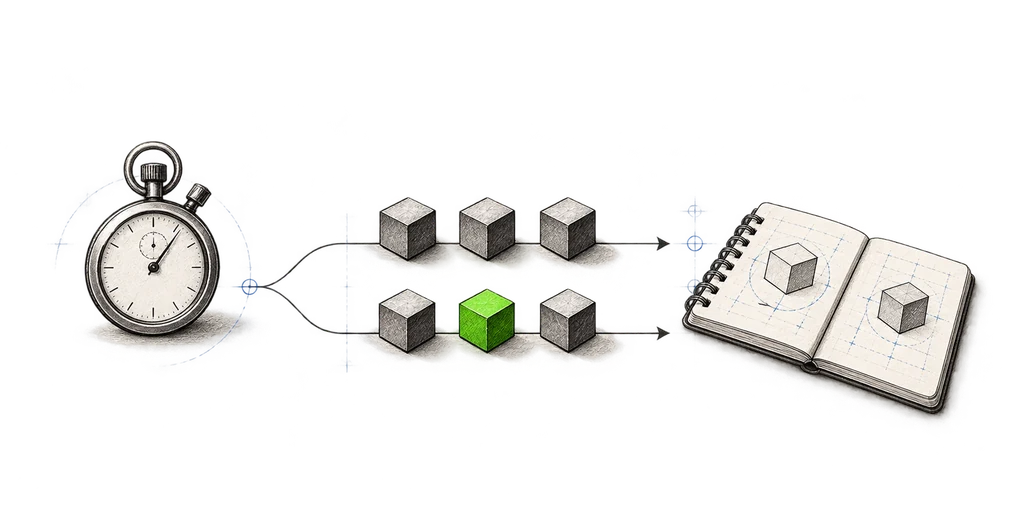
Move time to follow a digital right. Compare its original expiry with a timely or late renewal request.
The right keeps its original expiry.
Choose the initial expiry, the request time and the proposed new expiry. Apply the values to update the comparison.
THE IDEAS BEHIND CIRCULA
From distributed systems and blockchain programmability to expiry, renewal and questions about what remains afterwards.
A shared record maintained across multiple network participants, who use agreed rules to validate and synchronize updates.
Rules encoded in the protocol or in smart contracts determine how ledger operations are validated and executed. This is the programmable context in which CIRCULA studies expiry.
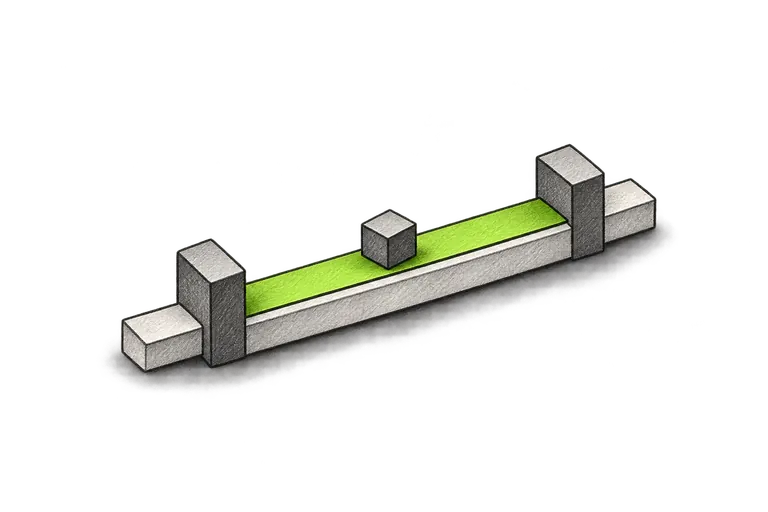
A boundary after which an operation is no longer valid; its records may remain according to the system’s design.
Information that may support understanding or verification after expiry. Its availability and usefulness are research questions.
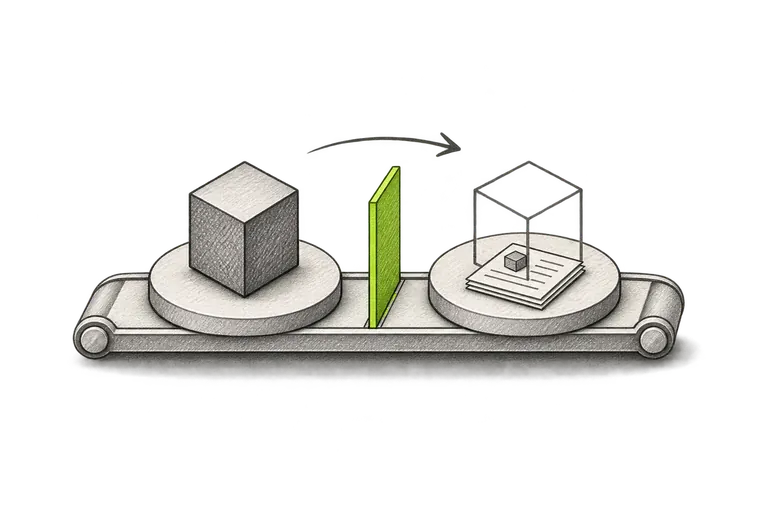
A distinction that matters – Expiry changes validity; what remains afterwards depends on the system’s design.
THE RESEARCH PROGRAMME
Four connected work packages move from understanding existing lifetime rules to formalising, building and testing expiry-aware ledger designs. Evidence Atlas, Semantic Reference, Proof of Concept and Evaluation Bench each provide an artefact for the next stage.
Four connected work packages, with evaluation feeding back into the design.
Map existing lifetime mechanisms, their enforcement layers and the evidence needed to compare designs.
WP2FORMALISEFormalise expiry and renewal rules, including assumptions about what information remains after expiry, through a formal model and an executable reference.
WP3IMPLEMENTBuild a ledger prototype and check its behaviour against the selected semantics.
WP4EVALUATECompare designs under controlled workloads, measuring storage, verification and recovery costs.
SCIENTIFIC LEADERSHIP & COORDINATION
The core team brings together one principal investigator, one postdoc and two PhD researchers, supported by external and international partners.

Principal investigator
Université de Neuchâtel · Switzerland
Scientific leadership, institutional coordination and responsibility for the project.

Scientific coordinator
Université de Neuchâtel · Switzerland
Coordinates the scientific roadmap, systems work and reproducible experiments under PI responsibility. Planned postdoc.
External and international research partners contribute formal-methods, legal, institutional and adoption expertise.
OPEN POSITIONS
Two open PhD positions at Université de Neuchâtel: blockchain systems and formal semantics; deployability and quantitative validation.
Explore the PhD positionsCOLLABORATE WITH CIRCULA
Universities, research groups, companies and institutions are welcome to propose collaborations, discuss use cases or express interest in CIRCULA. Tell us where your expertise and our research could meet.
Propose a collaborationHOST, PLACE & FUNDING
Hosted at Université de Neuchâtel, Switzerland, CIRCULA connects a local research team with international partners through a four-year programme funded by the Swiss National Science Foundation.
Host university

The host university and the home of CIRCULA’s core research team.
Based in Neuchâtel, Switzerland, with a programme open to international collaboration.
Research funding

Switzerland’s national research funding organisation, supporting research across all academic disciplines.
Swiss National Science Foundation · Project Funding · Grant 10010141.
Grant 10010141CIRCULA / SNSF RESEARCH PROGRAMME
CIRCULA studies how blockchains’ shared state, validation rules and verifiable history provide a programmable environment in which expiry and renewal can be formalised and evaluated. The research programme connects a formal model, an executable ledger prototype and reproducible experiments to study the effects, costs and limits of these mechanisms, including what information, if any, remains useful for verification or recovery after expiry.
EXPLORE EXPIRY
Move time to follow a digital right. Compare its original expiry with a timely or late renewal request.
The right keeps its original expiry.
Choose the initial expiry, the request time and the proposed new expiry. Apply the values to update the comparison.
THE IDEAS BEHIND CIRCULA
From distributed systems and blockchain programmability to expiry, renewal and questions about what remains afterwards.
A shared record maintained across multiple network participants, who use agreed rules to validate and synchronize updates.
Rules encoded in the protocol or in smart contracts determine how ledger operations are validated and executed. This is the programmable context in which CIRCULA studies expiry.
A boundary after which an operation is no longer valid; its records may remain according to the system’s design.
Information that may support understanding or verification after expiry. Its availability and usefulness are research questions.
A distinction that matters – Expiry changes validity; what remains afterwards depends on the system’s design.
THE RESEARCH PROGRAMME
Four connected work packages move from understanding existing lifetime rules to formalising, building and testing expiry-aware ledger designs. Evidence Atlas, Semantic Reference, Proof of Concept and Evaluation Bench each provide an artefact for the next stage.
Four connected work packages, with evaluation feeding back into the design.
Map existing lifetime mechanisms, their enforcement layers and the evidence needed to compare designs.
WP2FORMALISEFormalise expiry and renewal rules, including assumptions about what information remains after expiry, through a formal model and an executable reference.
WP3IMPLEMENTBuild a ledger prototype and check its behaviour against the selected semantics.
WP4EVALUATECompare designs under controlled workloads, measuring storage, verification and recovery costs.
SCIENTIFIC LEADERSHIP & COORDINATION
The core team brings together one principal investigator, one postdoc and two PhD researchers, supported by external and international partners.
Principal investigator
Université de Neuchâtel · Switzerland
Scientific leadership, institutional coordination and responsibility for the project.
Scientific coordinator
Université de Neuchâtel · Switzerland
Coordinates the scientific roadmap, systems work and reproducible experiments under PI responsibility. Planned postdoc.
External and international research partners contribute formal-methods, legal, institutional and adoption expertise.
OPEN POSITIONS
Two open PhD positions at Université de Neuchâtel: blockchain systems and formal semantics; deployability and quantitative validation.
Explore the PhD positionsCOLLABORATE WITH CIRCULA
Universities, research groups, companies and institutions are welcome to propose collaborations, discuss use cases or express interest in CIRCULA. Tell us where your expertise and our research could meet.
Propose a collaborationHOST, PLACE & FUNDING
Hosted at Université de Neuchâtel, Switzerland, CIRCULA connects a local research team with international partners through a four-year programme funded by the Swiss National Science Foundation.
Host university
The host university and the home of CIRCULA’s core research team.
Based in Neuchâtel, Switzerland, with a programme open to international collaboration.
Research funding
Switzerland’s national research funding organisation, supporting research across all academic disciplines.
Swiss National Science Foundation · Project Funding · Grant 10010141.
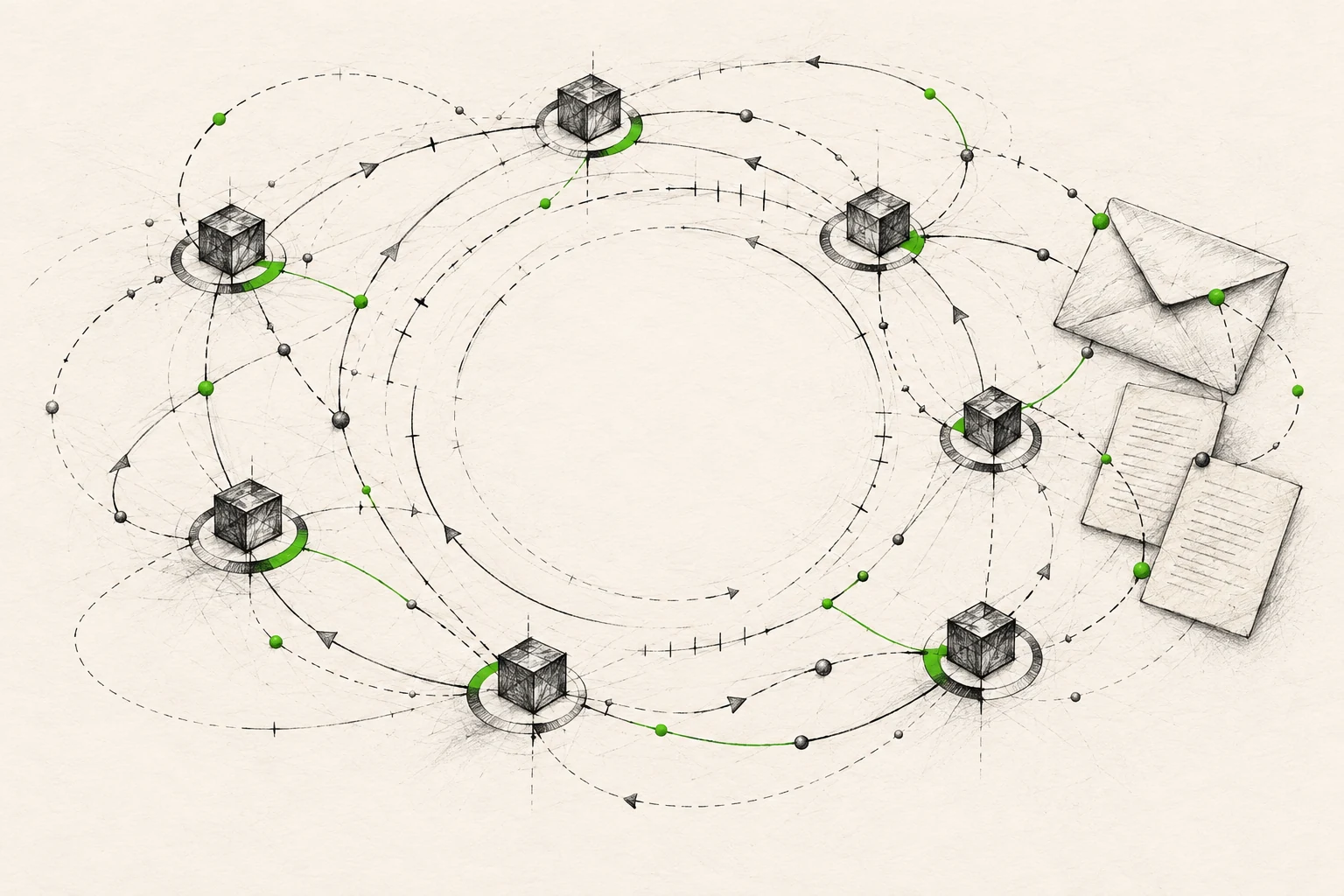
Grant 10010141CIRCULA studies expiry and renewal in the programmable environment provided by blockchains’ shared state, validation rules and verifiable history. The research programme develops formal semantics, a minimal prototype and reproducible experiments to assess effects and costs, including whether useful information remains for verification or recovery after expiry. Inspired by circulation and its Latin root circulus (“circle”), the name evokes the lifecycle of digital claims and rights: validity, expiry and possible renewal. [1]
THE SCIENTIFIC AIM
Blockchains commonly retain records and verification state after an operation is completed or a right becomes inactive. Lifetime rules already exist as timeouts, timelocks and retention policies, but their assumptions, enforcement layers and recovery requirements are often studied separately.
CIRCULA connects these questions in one fixed technical context: native ledger-level operations with expiry-conditioned validity and renewal. It asks which designs preserve correctness and auditability, how much persistence can be bounded, and what new verification, recovery or operator costs arise.
THE WIDER PERSPECTIVE
Expiry changes validity. The research will examine what information is retained, discarded or becomes unavailable, and under which conditions verification, contestation or recovery remain possible.
CIRCULA investigates the availability and usefulness of information that may remain after expiry.
THE CONCEPTUAL FRAMEWORK
The foundations explain how nodes maintain a shared ledger. The validity concepts describe what CIRCULA will model, implement and evaluate.
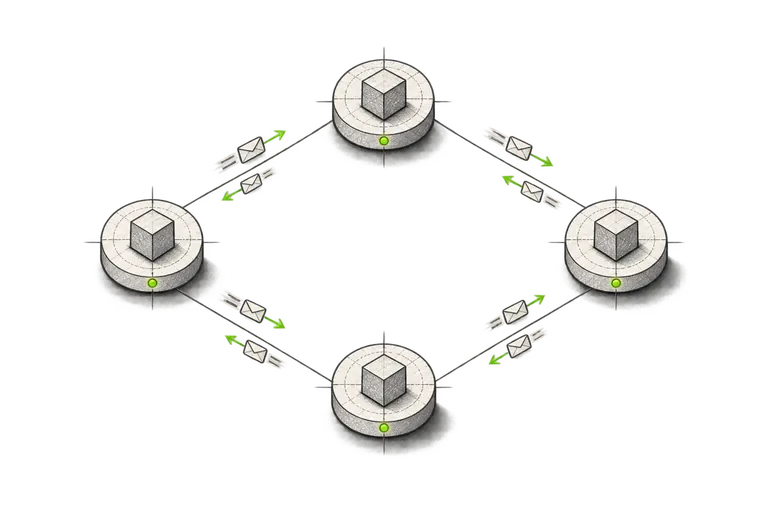
Independent computers coordinate over a network, where messages can be delayed and individual nodes can fail.
A shared ledger that groups transactions into blocks linked by cryptographic hashes, so participants can verify the order and history.
A protocol for nodes to agree on a shared result, such as which transactions enter the ledger and in what order.
Rules encoded in the protocol or in smart contracts determine how ledger operations are validated and executed. This is the programmable context in which CIRCULA studies expiry.
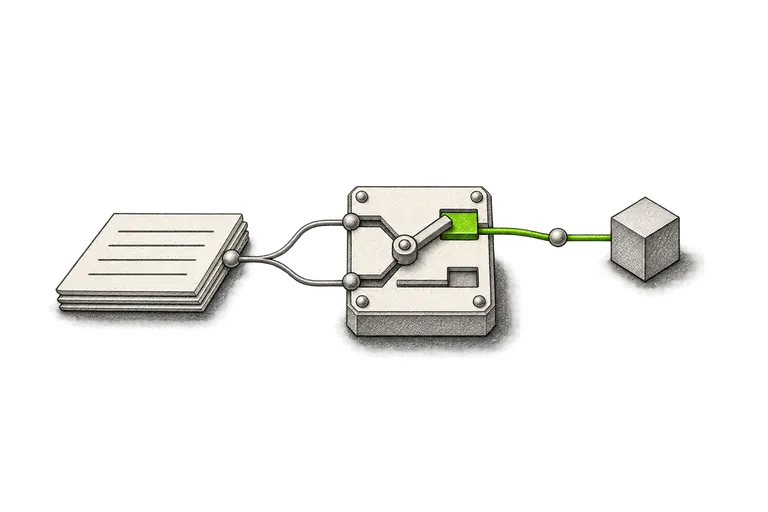
The period in which a ledger operation meets its lifetime conditions. Its start, end and notion of time must be specified.
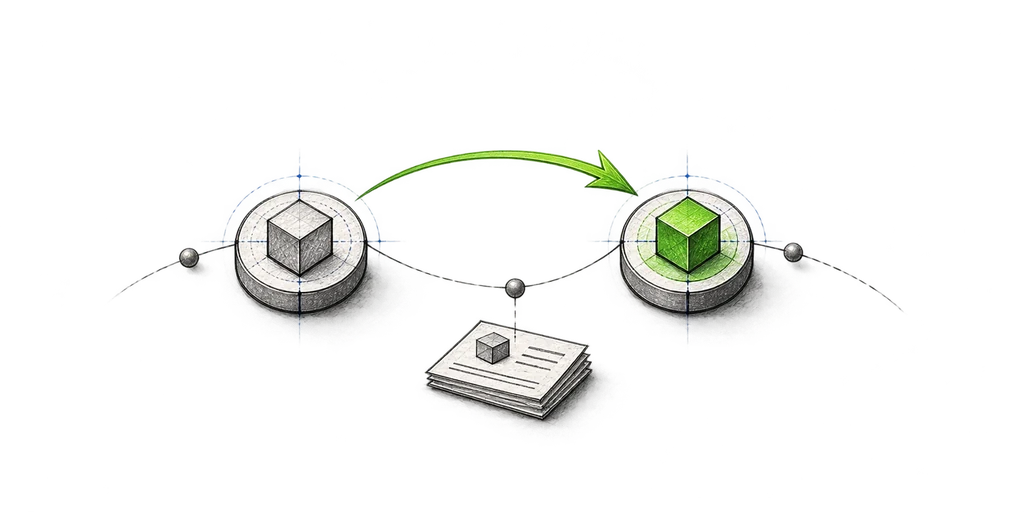
The transition from valid to expired at a defined boundary. The system’s design determines how historical records are handled.
An authorized operation that changes or extends a validity interval. Timing, permissions and late renewal need explicit semantics.
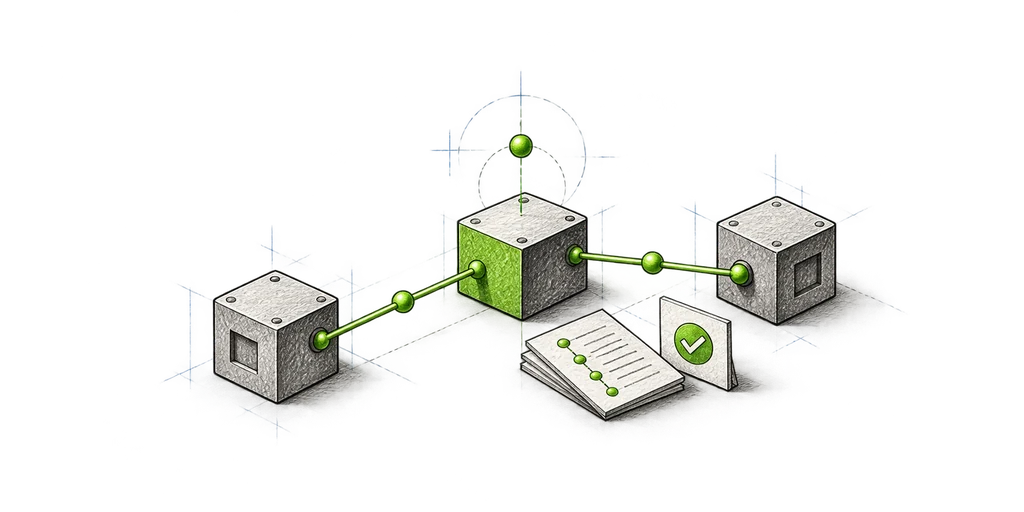
Records or proofs that may remain after validity ends. CIRCULA will assess what is available and whether it supports verification or recovery.
The part of the system that checks lifetime conditions. CIRCULA investigates ledger-native enforcement and its costs and guarantees.
The ability to investigate past states, explain expiry decisions and support recovery while preserving a transparent historical record.
Coin Metrics snapshots compare infrastructure growth and holdings patterns for Bitcoin, Ethereum and USDC on Ethereum at the end of 2018 and 2025. Together, they show how growing ledger records coexist with concentration and dormancy, motivating explicit lifetime rules, bounded retention and recovery-aware archival. [2]
Read each row from 2018 to 2025; the final column gives relative growth. Ledger size is a cumulative data proxy in GB; addresses and transactions are cumulative counts in millions; smart contracts are an end-of-period stock. People can use multiple addresses, and an address can represent multiple people. Growth rates use the underlying series before rounding, so very small displayed starting values can produce large percentages.
| Asset | Metric | End-2018 | End-2025 | Change (%) |
|---|---|---|---|---|
| BTC | Ledger size proxy (GB, cumulative) | 198.11 | 710.27 | +258.5% |
| New addresses (millions, cumulative) | 470.36 | 1,499.19 | +218.7% | |
| Transactions (millions, cumulative) | 368.69 | 1,290.96 | +250.1% | |
| ETH | Ledger size proxy (GB, cumulative) | 69.02 | 1,411.29 | +1944.8% |
| New addresses (millions, cumulative) | 73.44 | 388.79 | +429.4% | |
| Smart contracts (millions, end-of-period) | 9.05 | 63.36 | +600.0% | |
| Transactions (millions, cumulative) | 368.81 | 3,163.55 | +757.8% | |
| USDC on ETH | New addresses (millions, cumulative) | 0.02 | 25.80 | +116545.5% |
| Transactions (millions, cumulative) | 0.05 | 146.39 | +295302.2% |
The left group shows shares of supply; the right group shows the implied USD value of those holdings in billions. Both “Change” columns report relative percentage changes; percentage points measure the absolute difference between shares. For example, Ethereum’s top-address share falls from 99.82% to 69.37%: a drop of 30.45 percentage points, or 30.5% relative to 2018.
| Asset | Indicator | Share of supply (%) | Implied value (USD bn) | ||||
|---|---|---|---|---|---|---|---|
| 2018 | 2025 | Change (%) | 2018 | 2025 | Change (%) | ||
| BTC | Top 10% of addresses | 98.94% | 98.83% | -0.1% | 63.68 | 1,727.28 | +2612.4% |
| On exchanges | 8.79% | 12.46% | +41.7% | 5.66 | 217.71 | +3746.9% | |
| Asset dormancy | 98.57% | 97.93% | -0.6% | 63.44 | 1,711.45 | +2597.7% | |
| ETH | Top 10% of addresses | 99.82% | 69.37% | -30.5% | 13.59 | 249.85 | +1737.9% |
| On exchanges | 16.95% | 11.78% | -30.5% | 2.31 | 42.44 | +1738.5% | |
| Asset dormancy | 91.45% | 90.19% | -1.4% | 12.45 | 324.82 | +2508.3% | |
| USDC on ETH | Top 10% of addresses | 99.99% | 99.85% | -0.1% | 0.25 | 51.63 | +20491.1% |
| On exchanges | 45.17% | 20.61% | -54.4% | 0.11 | 10.66 | +9308.7% | |
| Asset dormancy | 68.96% | 68.70% | -0.4% | 0.17 | 35.52 | +20442.9% | |
Ethereum’s ledger-size proxy rises from 69.02 to 1,411.29 GB, about 20.4 times its 2018 level. This growing historical footprint motivates studying bounded persistence alongside audit and recovery requirements.
Bitcoin’s dormancy indicator is still 97.93% in 2025, compared with 98.57% in 2018. Infrastructure growth can coexist with persistent inactivity, inviting further investigation into its relationship with circulation.
Ethereum’s exchange-held share drops from 16.95% to 11.78%, while its implied value rises from USD 2.31 to 42.44 billion. A lower supply share can still have a higher dollar value: the two groups answer different questions.
These snapshots describe trends. Establishing any causal effect of expiry would require further research. Concentration, exchange holdings and dormancy depend on custody, address reuse and accounting. Missing infrastructure metrics are inapplicable or unavailable as comparable series; cumulative counts and end-of-period stocks remain distinct.
Four questions connect lifetime semantics, enforcement placement, measurable gains and costs, and bounded downstream validation. RQ1–RQ3 form the technical core; RQ4 considers only designs that pass its correctness, auditability and recovery gates.
Semantics
Specify validity, expiry, renewal, auditability and recovery under explicit assumptions about time, triggering, finality and bounded persistence. The aim is to give each lifecycle event an unambiguous meaning that formal and executable models can test.
Placement
Compare enforcement at the system, contract, wallet or service layer. A placement is retained only if it preserves the stated invariants and passes boundary conformance tests; higher-layer conditioning remains a possible outcome when native enforcement is not technically viable.
Evaluation
Under controlled expiry-sensitive workloads, compare bounded-persistence gains with additional verification, recovery and operator costs. Use explicit non-expiring or higher-layer baselines, and judge results against scenario-specific cost envelopes and measurement uncertainty.
Deployability
For designs that pass the technical gates, examine which enforcement layers remain admissible under transparency, auditability, recovery and due-process constraints. Validation stays within the fixed project context; regulated-payment references set the boundaries of the comparison.
From question to evidence
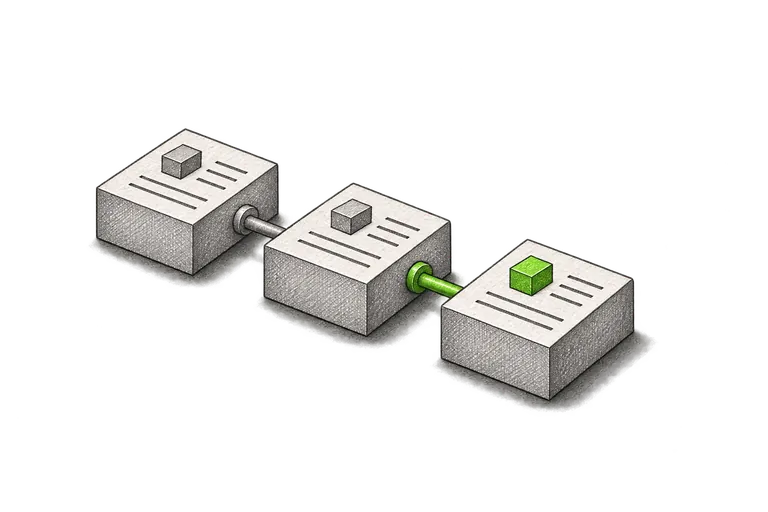
The project follows a semantics-to-evidence pipeline. An evidence map fixes assumptions and baselines; formal and executable semantics define the checks; a bounded prototype demonstrates retained placements; controlled experiments compare their behaviour, costs and limits.
Fixed technical context
Native ledger-level operations with expiry-conditioned validity and renewal
RQ1–RQ4: framing inputs
RQ1 + RQ3 modelling inputs
RQ1–RQ2
RQ3–RQ4 + RQ2 placement comparisons
Read from the fixed technical context through the research questions to the four linked outputs. Each work package shows its RQ coverage; evaluation feeds back into semantics and baselines. The prototype connects consensus, tokenomics and the expiry ledger.
WP1 / PLANNED WORK
Document existing lifetime rules: what expires, which layer enforces the rule, and which assumptions it needs. The atlas provides the evidence and comparison boundaries for later work.
All research staff begin with this common framing.
PLANNED OUTPUT
Annotated evidence · Lifetime-rule taxonomy · Comparison boundaries
WP2 / PLANNED WORK
Formalise issuance, transfer, expiry, renewal, contestation, settlement and recovery. Model what information is retained or discarded and under which assumptions verification or recovery is possible. Develop a deterministic executable reference and conformance scenarios.
The model states its assumptions about time and finality.
PLANNED OUTPUT
Formal semantics · Executable reference · Conformance scenarios
WP3 / PLANNED WORK
Implement the selected semantics in a minimal node or small testbed. Examine expiry-aware primitives and bounded persistence, and test which verification or recovery interfaces can be supported after expiry.
Conformance checks determine which designs proceed to evaluation.
PLANNED OUTPUT
Bounded prototype · Conformance checks · Audit and recovery interfaces
WP4 / PLANNED WORK
Compare selected designs with explicit baselines under controlled workloads. Measure persistence, verification and recovery costs; examine institutional and adoption constraints in the selected contexts.
Report uncertainty, limitations and negative results.
PLANNED OUTPUT
Controlled comparisons · Reproducible configurations · Evidence snapshots
Evaluation is part of an internal scientific review cycle. Conformance failures revise semantics or implementation choices; experiments can refine baselines, observables and deployment boundaries. Only designs meeting correctness, auditability and recovery requirements proceed. Versioned research artefacts document those decisions.
Explore the resultsCIRCULA combines scientific leadership and day-to-day coordination with formal-methods, legal, institutional and adoption perspectives.
SCIENTIFIC LEADERSHIP & COORDINATION
The core team brings together one principal investigator, one postdoc and two PhD researchers, supported by external and international partners.
Principal investigator
Université de Neuchâtel · Switzerland
Scientific leadership, institutional coordination and responsibility for the project.
Scientific coordinator
Université de Neuchâtel · Switzerland
Coordinates the scientific roadmap, systems work and reproducible experiments under PI responsibility. Planned postdoc.
OPEN PHD POSITION
Université de Neuchâtel · Switzerland
Executable semantics, prototypes, conformance testing, CI and reproducible research artefacts.
OPEN PHD POSITION
Université de Neuchâtel · Switzerland
Use cases, deployability analysis, institutional assumptions, baselines and measurable validation scenarios.
RESEARCH PARTNERS & SCIENTIFIC ADVICE

Research partner · law
Université de Neuchâtel · Switzerland
Legal and institutional perspectives on transparency, due process, auditability and recovery.

Research partner · formal methods
Università degli Studi di Urbino Carlo Bo · Italy
Formal and executable modelling, and the connection between semantics and performance evaluation.

Research partner · adoption
Université de Neuchâtel · Switzerland
Market organisation, incentives and adoption constraints in selected validation contexts.

Scientific advisor · distributed systems
University of Sydney · Australia
Blockchain systems, fault tolerance and evaluation design.

Scientific advisor
Université de Neuchâtel · Switzerland
Distributed, concurrent, dependable and secure computing systems.
WE ARE HIRING
Systems, formal semantics and experimental evaluation; deployability, digital economy and quantitative validation.
Explore the PhD positionsCIRCULA connects research findings with the evidence, software and methods behind them. Four planned artefacts carry the work from an evidence atlas to executable semantics, a prototype and controlled evaluation. This page brings together those artefacts, publications, public releases and project milestones as the programme progresses.
From programme to results
Each work package produces a distinct, connected artefact. The atlas frames the questions; the reference defines the rules; the prototype implements retained designs; the evaluation bench supplies controlled comparisons. These are planned outputs, with public materials linked when available.
Annotated evidence maps existing lifetime mechanisms, their enforcement layers and assumptions. The atlas establishes the taxonomy and comparison boundaries used by subsequent work packages.
View work packageA formal model and executable reference describe validity, expiry and renewal, including assumptions about retained information and possible verification or recovery. Invariants and conformance scenarios make implementations comparable against explicit rules.
View work packageA bounded ledger prototype implements selected lifetime rules and enforcement placements. Conformance checks and audit and recovery interfaces connect its behaviour to the semantic reference.
View work packageControlled workloads compare designs with explicit baselines, measuring persistence, verification and recovery costs. Versioned configurations, datasets and analysis materials make the comparisons reproducible and their limits inspectable.
View work packagePublications & releases
Project publications and public releases will be listed as they become available. Each entry will connect a finding or implementation to its supporting research artefact, so readers can follow both the result and how it was obtained.
Release records will identify the version, research questions, assumptions, baselines and interpretation limits. Links to repositories, archived datasets, configurations and licences will make the supporting materials easy to find and reuse.
Project milestones
Public milestones document the programme’s progress, from funding approval and launch to research releases. Announcements appear alongside the results they introduce, keeping the project’s context and supporting evidence together.
Hosted at Université de Neuchâtel, CIRCULA will study expiry and renewal in the programmable context of blockchain systems through formal semantics, prototypes and controlled evaluation.
Blockchain and distributed systems research at Université de Neuchâtel, Switzerland.
The provisional application deadline is 01.12.2026. Expected start: 01.02.2027. Contact the project team for applications and enquiries.
The Institute of Computer Science invites applications for two fully funded PhD positions within CIRCULA – Expiry-Aware System Design for Blockchains, a four-year project funded by the Swiss National Science Foundation.
PHD 1 / SYSTEMS
The first PhD focuses on the technical design, implementation and evaluation of expiry-aware distributed systems.
Relevant backgrounds include distributed systems, blockchain, computer systems, networking, software engineering, formal methods and security. AI-enabled systems, AI-assisted testing, modern cryptography and quantum-safe technologies are welcome where relevant to the research direction.
PHD 2 / DEPLOYABILITY
The second PhD focuses on deployability and quantitative validation of expiry-aware mechanisms, including economic, operational and institutional constraints.
Relevant backgrounds include computer science, data science, computational economics, information systems, financial engineering, computational social science, digital assets and fintech. Digital economics, cryptoeconomics, financial infrastructures, autonomous agents and AI-supported simulation are particularly relevant.
Research software, distributed-system experimentation, formal modelling, quantitative analysis and cluster/cloud deployment. University infrastructure includes GPU- and SGX/TDX-capable resources.
Python · Go · Rust · Bash
Git · Linux · Docker · Kubernetes
CI/CD ·
Networking · Observability
Ansible · Terraform / OpenTofu
TLA+ · Alloy · Spin · Proof assistants
NumPy · pandas · SciPy · Jupyter · R
Blockchain/DLT
frameworks
AI tools · Agent-based simulation
Familiarity with a selection of these technologies and a willingness to develop further skills are welcome.
A Master Degree in Computer Science, or strongly related one, is required. We look for strong analytical skills, programming and/or quantitative research experience, the ability to work independently and discuss methods and findings within the research team, an interest in experimental reproducibility, and strong written and spoken English.
Nice to have: French at CEFR B2 level or above.
Applicants may indicate a preference for PhD 1 or PhD 2, or state that they have no preference and wish to be considered for both.
Combine all application materials into one PDF and email it to valerio.schiavoni@unine.ch with the subject “CIRCULA PhD Application”. Use this exact subject for your application.
THE SELECTION PROCESS
A time-bounded assignment may combine open questions, a compact technical task, problem analysis and a personal research idea. Standard development and AI-assisted tools may be used with substantial use disclosed; candidates must explain and defend their submission.
Project contactsScientific enquiries, institutional collaboration and questions about CIRCULA’s programme.
Principal investigator
Université de Neuchâtel · Switzerland
Scientific leadership, institutional coordination and responsibility for the project.